The worst way to die... is horrifying.
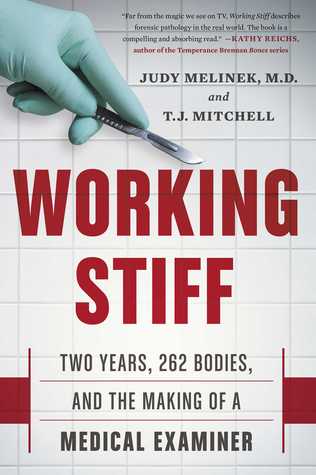
This is the most fascinating and morbid book I have read so far this year. It's essentially the highlight reel of Dr. Judy Melinek's 2 years and 262 autopsies as Chief Medical Examiner inNew York City. If you're squeamish by gory details, read no further; my review has served its purpose in warning you, so stay away!
On to the actual review:
Dr. Melinek tells the stories well - some deaths are handled with the morbid humor deserving of a Darwin Award. Others are downright horrifying. One that stuck with me was the story of a factory worker who was crushed/essentially shredded by a an egg roll vegetable shredder-mixer that broke off the conveyor and flew into his chest. Each case is unique enough that you don't feel like you're getting mired in tedious and repetitive autopsies.
Though I have a pretty tough stomach regarding the gory details of homicide, I was not mentally prepared for her pediatric autopsy cases. There's one about how she received the body of a 3 year old girl, the same age as her own son at the time. Though the mother claimed that her child slipped in the bathtub of scalding water, Dr. Melinek piles up evidence of the child's abuse and subsequent murder by drowning. What hit me hard was evidence that the little girl had died curled into a ball, trying to protect herself.
The worst way to die, according to Dr. Melinek, was Doyle's case: getting thrown down a manhole, dropping 18 feet, falling into 300º water at the bottom of the steam tunnel, breaking his legs on impact, being stuck for hours with no way to climb out, screaming as he boiled to death, and his muscles in the arms and legs curling to the point of his bones bending and breaking as his body shrank down, just like how meat contracts when it's cooking. (uh, gross.) Even more horrifying was that by the state of his head and the lack of head trauma in the autopsy, Dr. Melinek determined that he had been conscious and cognizant of the pain the whole time. To find out why he even ended up in the manhole, read the book ;)
Despite the frustration, emotional stress, and disgusting aspects of the job, she ends up loving her job because she could counsel families, bring damning evidence to light, weave tight stories to speak for the dead, and wield the power to bring closure and justice for the wronged.
Great storytelling on a morbid yet fascinating career path. Check it out!
On to the actual review:
Dr. Melinek tells the stories well - some deaths are handled with the morbid humor deserving of a Darwin Award. Others are downright horrifying. One that stuck with me was the story of a factory worker who was crushed/essentially shredded by a an egg roll vegetable shredder-mixer that broke off the conveyor and flew into his chest. Each case is unique enough that you don't feel like you're getting mired in tedious and repetitive autopsies.
Though I have a pretty tough stomach regarding the gory details of homicide, I was not mentally prepared for her pediatric autopsy cases. There's one about how she received the body of a 3 year old girl, the same age as her own son at the time. Though the mother claimed that her child slipped in the bathtub of scalding water, Dr. Melinek piles up evidence of the child's abuse and subsequent murder by drowning. What hit me hard was evidence that the little girl had died curled into a ball, trying to protect herself.
The worst way to die, according to Dr. Melinek, was Doyle's case: getting thrown down a manhole, dropping 18 feet, falling into 300º water at the bottom of the steam tunnel, breaking his legs on impact, being stuck for hours with no way to climb out, screaming as he boiled to death, and his muscles in the arms and legs curling to the point of his bones bending and breaking as his body shrank down, just like how meat contracts when it's cooking. (uh, gross.) Even more horrifying was that by the state of his head and the lack of head trauma in the autopsy, Dr. Melinek determined that he had been conscious and cognizant of the pain the whole time. To find out why he even ended up in the manhole, read the book ;)
Despite the frustration, emotional stress, and disgusting aspects of the job, she ends up loving her job because she could counsel families, bring damning evidence to light, weave tight stories to speak for the dead, and wield the power to bring closure and justice for the wronged.
Great storytelling on a morbid yet fascinating career path. Check it out!


Comments
Post a Comment